
About Callan JMB
Learn about who we are, what we do, and stay up to date.
Emergency Preparedness & Response
Reliable, scalable, and proven solutions.
Specialty Packaging
A Shipping Story Beyond the Box
Products and Technologies
Innovation at Every Step: Callan JMB’s Products and Technologies
Fulfillment Services
Excellence Across Critical Industries

Press Releases
Official announcements and updates from Callan JMB.

Events
Upcoming events featuring Callan JMB.

Videos
Latest instructional and announcement videos from Callan JMB.

Publications
In-depth analysis of critical supply chain industry developments.

Blog
Latest developments shaping the industries Callan JMB supports.
- Investors
- Contact us


Building a U.S. Pharmaceutical Manufacturing Ecosystem:Why the Callan JMB–Alabama State University Partnership Matters
October 2026
The collaboration advances Atlas Complex by connecting pharmaceutical manufacturing, logistics, research, and workforce development to strengthen America's domestic supply chain.

For decades, the United States has benefited from a highly globalized pharmaceutical supply chain. That system created efficiencies, expanded access to international manufacturing capacity, and helped deliver critical medicines to patients worldwide.
It also created vulnerabilities.
The COVID-19 pandemic exposed how quickly international disruptions can affect the availability of medicines, medical supplies, and the materials needed to manufacture them. When production is concentrated overseas, a shutdown, geopolitical conflict, transportation delay, or shortage of a key ingredient can reverberate throughout the entire healthcare system.
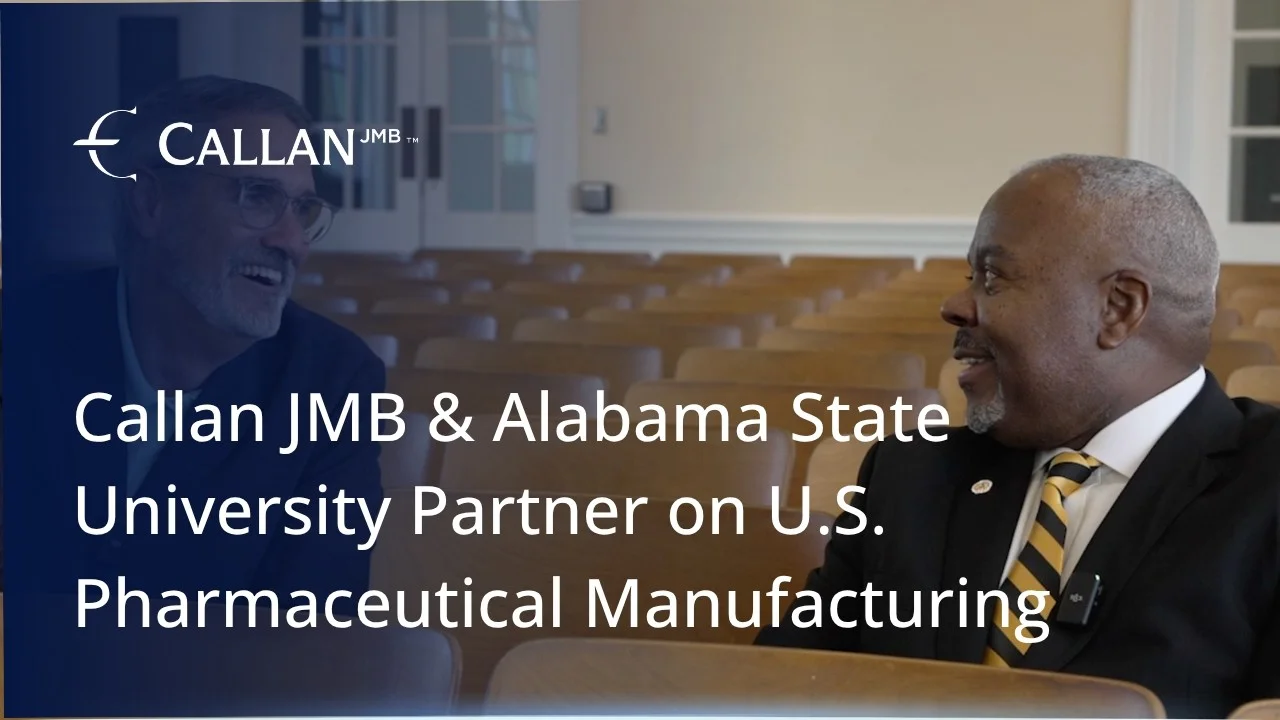

Callan JMB & Alabama State University Partner on U.S. Pharmaceutical Manufacturing
Dr. Quinton T. Ross, Jr., President of Alabama State University, and Wayne Williams, CEO and President of Callan JMB, share their perspectives on the partnership and what it means for their organizations.
Read Press ReleaseStrengthening domestic pharmaceutical manufacturing has therefore become more than an economic priority.
It is an issue of public health, national preparedness, and national security.
That is what makes the strategic partnership between Callan JMB Inc. and Alabama State University (ASU) so important. The collaboration brings pharmaceutical manufacturing, applied research, workforce development, quality systems, logistics, and distribution together within a connected ecosystem anchored by the Atlas Complex by Callan JMB in Marion, Alabama.
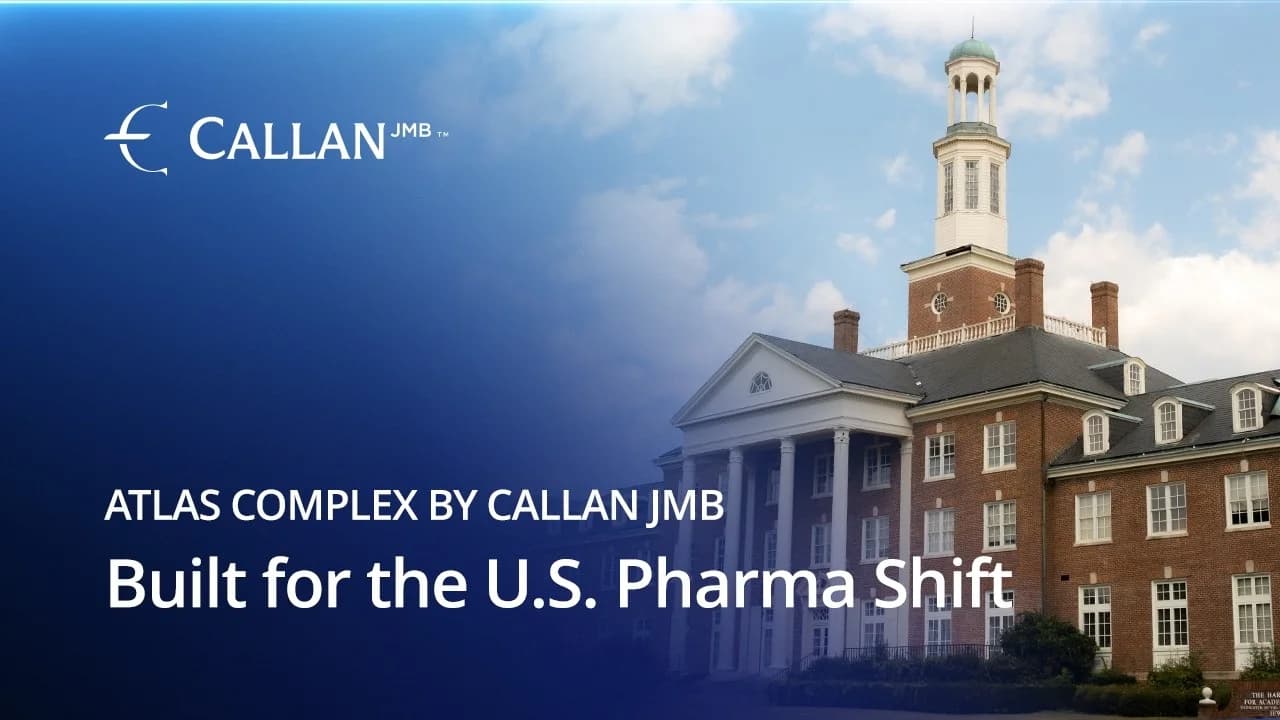
Atlas Complex by Callan JMB: Built for the United States Pharma Shift
Built on a 150+ acre campus in Alabama, Atlas creates an integrated environment where pharmaceutical and life sciences companies can manufacture, test, store, and distribute, all in one place.
Read Press ReleaseThe partnership matters on three distinct but closely connected levels: it can help strengthen the United States' pharmaceutical supply chain, advance the long-term development of the Atlas Complex, and create meaningful new opportunities for Alabama State University's students, faculty, and broader academic community.
More importantly, it demonstrates why rebuilding domestic manufacturing capacity cannot be accomplished by constructing facilities alone. The country must also develop the skilled people, operational systems, academic partnerships and supply-chain infrastructure required to sustain that capacity over time.


This partnership represents far more than a new business opportunity, it reflects our vision for the future of healthcare infrastructure in the United States.
Callan JMB
Why This Matters to the United States
A resilient pharmaceutical supply chain depends on the ability to develop, manufacture, test, store, and distribute critical products without relying too heavily on any single country, supplier, or transportation route.
Domestic manufacturing is central to that equation, but relocating production to the United States alone will not solve the problem.
Pharmaceutical manufacturing operates in a complex, highly regulated environment. Companies require suitable facilities, quality assurance and quality control capabilities, regulatory expertise, reliable logistics, specialized warehousing, cold-chain capacity, trained employees, and secure distribution networks. If any one of those components is missing, manufacturing capacity can remain limited regardless of how strong the underlying demand may be.
The Callan JMB–ASU partnership is intended to address those needs as parts of the same system.

Through the collaboration, Callan JMB would provide operational infrastructure to support future pharmaceutical manufacturing activities, including logistics, regulatory compliance, warehousing, facility leasing, supply-chain management, housing support, and related services. ASU would contribute academic expertise, applied research, workforce development, and a pipeline of students prepared to work within pharmaceutical manufacturing, biotechnology, healthcare logistics, and other related fields.
The result is a model designed to connect production with the infrastructure and talent needed to make production viable.
That distinction matters. America does not simply need more places where pharmaceuticals can be manufactured. It needs complete environments that can support companies as they establish, expand, and operate domestic facilities.
This kind of integrated platform could help address several national priorities at once.
It can reduce dependence on distant and highly concentrated sources of production. It can provide greater visibility and accountability throughout the supply chain. It can support faster responses during public-health emergencies. It can help protect access to critical medicines. It can also help develop a domestic workforce with the technical and regulatory knowledge needed to support advanced pharmaceutical operations.
In short, it helps shift the national conversation from the idea of reshoring pharmaceutical production to the practical work of making it possible.
Pharmaceutical Manufacturing Is Also a Workforce Challenge
Buildings, equipment, and technology are essential, but none of them can operate without people.
Pharmaceutical manufacturing depends on professionals across a wide range of disciplines: biotechnology, chemistry, quality assurance, regulatory compliance, engineering, data management, supply-chain operations, cold-chain logistics, inventory management and advanced manufacturing. These roles require specialized training and, in many cases, direct exposure to regulated industry environments.
A shortage of skilled workers can become just as significant a barrier to domestic manufacturing as a shortage of physical infrastructure.
That is why ASU's role is fundamental to the partnership, not supplementary.
By aligning academic programming, internships, faculty-led research, and industry engagement with the needs of pharmaceutical and life-sciences companies, ASU can help develop the talent required to support long-term industry growth. Students would have opportunities to apply what they learn in real-world settings, while companies operating within the Atlas ecosystem could access an emerging workforce familiar with industry demands.
This creates a more direct connection between education and employment. Students gain clearer pathways into growing industries, employers gain access to qualified talent, and academic programs remain connected to evolving workforce needs.
The benefits can extend well beyond a single company or facility. Every graduate who develops expertise in biotechnology, quality systems, healthcare logistics, or regulatory compliance adds to the nation's capacity to manufacture and protect critical medical products.


This partnership connects education directly with industry, preparing our students to lead and innovate in a rapidly evolving sector.
Alabama State University
Why This Matters to the Atlas Complex
Atlas Complex by Callan JMB was not created simply to provide space for tenants. It was conceived as an integrated pharmaceutical, medical, and logistics campus where complementary capabilities could operate together.
Located on approximately 150 acres in Marion, Alabama, Atlas is being developed to support pharmaceutical manufacturing, quality assurance and quality control, research collaboration, workforce development, cold-chain logistics, warehousing and domestic distribution.
That combination is central to the campus's value.
A pharmaceutical company entering or expanding within the United States may need far more than a manufacturing floor. It may require regulatory and operational support, access to specialized talent, temperature-controlled storage, quality systems, dependable logistics, connections to researchers, and appropriate infrastructure for future growth.
Atlas is intended to bring those requirements together in one environment.
The partnership with ASU adds an academic and workforce-development dimension that makes the Atlas model significantly stronger. It connects the campus to a university that can support research, innovation, curriculum development, internships, and industry-aligned training.

For companies considering U.S. operations, that relationship can help answer one of the most persistent questions in site selection: Where will the workforce come from?
Atlas can offer more than a location. It can provide access to an ecosystem in which workforce development begins before a company's hiring needs reach full scale. Academic programs can respond to emerging industry requirements, students can gain relevant experience, and employers can engage with prospective talent earlier.
The relationship also strengthens Atlas as a collaborative platform. Faculty researchers, students, pharmaceutical companies, logistics professionals, and other industry partners can work within a connected environment instead of operating in isolation.
That creates the potential to accelerate problem-solving, support commercialization, and shorten the distance between research and real-world application. For Atlas, the partnership transforms workforce development and academic collaboration from external considerations into core components of the campus itself.
Building an Integrated Pharmaceutical Ecosystem
There is an important difference between a business park and an ecosystem.
A business park provides physical space. An ecosystem creates relationships among the organizations, capabilities, and people operating within that space. At Atlas, those relationships are intended to connect several stages of the pharmaceutical value chain:
 Applied research and innovation
- Workforce education and training
- Pharmaceutical manufacturing
- Quality assurance and quality control
- Regulatory and operational oversight
- Warehousing and inventory management
- Cold-chain logistics
- Secure domestic distribution
Research becomes more relevant when faculty and students understand the challenges facing manufacturers. Academic programming becomes more responsive when it is informed by real workforce requirements. Manufacturing becomes more sustainable when companies have access to trained employees, logistics support, and quality systems. Distribution becomes more reliable when it is connected directly to compliant storage, monitoring, and supply-chain management.
The ASU partnership helps turn the vision for Atlas into a more complete operating model. It bridges education, industry, and infrastructure, helping create an environment that can support companies through multiple stages of growth
Why This Matters to Alabama State University
For Alabama State University, the partnership creates an opportunity to place students and faculty closer to an industry of growing national importance. Students could gain hands-on experience through internships, research initiatives, and engagement with companies operating at Atlas. Academic programs could be aligned with career opportunities in biotechnology, pharmaceutical manufacturing, quality systems, healthcare logistics, regulatory compliance, and supply-chain management.
Faculty could participate in applied research addressing practical challenges in healthcare manufacturing and distribution. This could create new opportunities for interdisciplinary work, external partnerships, and translating academic knowledge into commercial and public-health applications.
The collaboration also gives ASU an opportunity to help shape an emerging pharmaceutical ecosystem rather than simply supplying employees after it has been built.
That is a more influential role.

It positions the University as a source of knowledge, innovation, and leadership within Alabama's growing life-sciences and advanced-manufacturing sectors. It also demonstrates the broader role that historically Black colleges and universities can play in industries central to the country's economic competitiveness and national security.
ASU's involvement can help ensure that students from communities historically underrepresented in pharmaceutical manufacturing, biotechnology, and advanced industry have meaningful access to these careers. That expands the talent pool available to employers while opening doors to high-quality professional opportunities.
The partnership is therefore not only about preparing students for existing jobs.
It is about giving students and faculty a role in building an industry that is still taking shape.
A Partnership Rooted in History — and Tested During a Crisis
The relationship between Alabama State University and Callan JMB did not begin with the Atlas Complex. The organizations first worked together during the COVID-19 pandemic, when the immediate priority was protecting ASU students' health and safety. That experience established a foundation of trust during one of the most difficult public-health emergencies in modern history. The partnership has now evolved from addressing an immediate crisis to building the capacity required to prepare for future ones.
That progression is significant.
Alabama State University & Callan JMB: Building the Future of U.S. Pharmaceutical Manufacturing
For nearly 160 years, Alabama State University has empowered students to lead with purpose. Today, that legacy continues through a transformative partnership with Callan JMB at the Atlas Complex in Marion, Alabama.
During the pandemic, the focus was on protecting students in real time. Today, the focus includes preparing students to become researchers, innovators, manufacturers, logistics professionals, and industry leaders who can strengthen the country's healthcare infrastructure.
The university also has a powerful historical connection. Alabama State University was founded in Marion in 1867 before relocating to Montgomery. Through the Atlas partnership, ASU is returning to its birthplace in a new capacity — helping create educational and economic opportunities tied to industries that will shape the region's future.
This is not simply a return to Marion. It is an extension of ASU's longstanding mission of using education to create opportunity, serve communities, and prepare generations of leaders.
Creating Opportunity in Marion and Across Alabama
The national importance of pharmaceutical onshoring does not diminish the partnership's local importance. In fact, the two are closely connected.
Rebuilding domestic manufacturing will require investment in communities that can support new facilities, workers, and supply-chain operations. It will also require looking beyond traditional industry centers and recognizing the potential of regions with available infrastructure, academic institutions, and room for long-term growth.
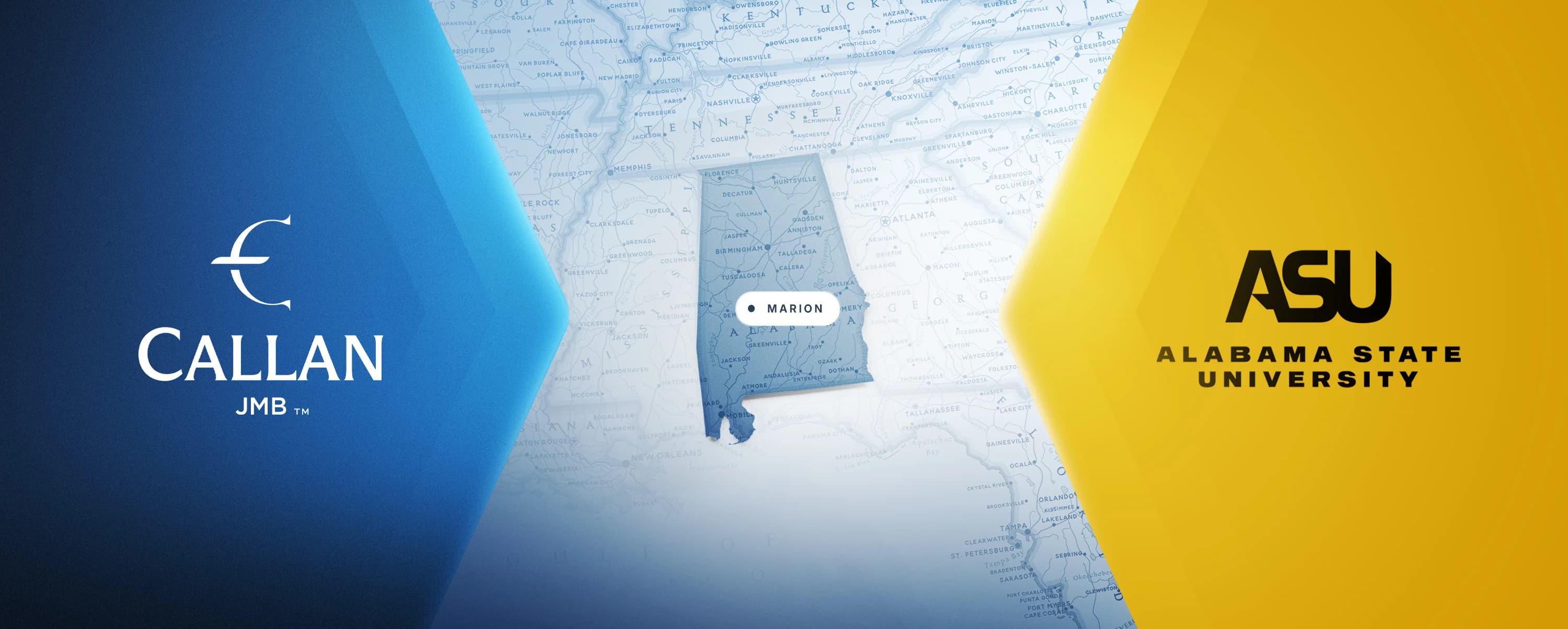
The Atlas Complex can help bring that investment to Marion and Alabama's Black Belt.
As the campus develops, it has the potential to attract pharmaceutical, biotechnology, research, and healthcare-logistics organizations. Those companies can create demand for employees, vendors, housing, transportation, professional services, and other supporting businesses.
The opportunity extends beyond jobs located directly on campus.
A large-scale industry ecosystem can generate economic activity throughout the surrounding region, expanding the benefits to local businesses, families, and communities. ASU's involvement strengthens the likelihood that people from Alabama will be prepared to participate in that growth. By connecting education with industry requirements, the partnership can help ensure that economic development and workforce development move forward together.
For students, it can create pathways into highly skilled careers. For the region, it can support investment and economic diversification. For employers, it can provide access to talent. For the state, it can reinforce Alabama's position within the life-sciences, logistics, and advanced-manufacturing economy.
A Meaningful Long-Term Opportunity for Callan JMB
The partnership also aligns with Callan JMB's broader strategy of supporting the infrastructure behind essential industries.
Under the announced agreement, Callan JMB would receive 21% of the gross revenue generated by qualifying pharmaceutical manufacturing operations. Based on current development assumptions and subject to successful execution, management has identified a potential five-year revenue opportunity of approximately $414 million for the Company. The financial opportunity is meaningful, but it reflects the breadth of the role Callan JMB is expected to play. The Company's contribution extends beyond any single service.
Callan JMB would support the logistics, compliance, warehousing, facility management, supply-chain systems, infrastructure, and related operations required to connect pharmaceutical manufacturing with secure delivery.
These are not peripheral functions. They are the systems that allow pharmaceutical products to move safely and reliably from production to the patients and healthcare organizations that need them. The initiative therefore gives Callan JMB an opportunity to apply its existing experience in healthcare logistics, cold-chain operations, monitoring, compliance and preparedness within a larger domestic manufacturing platform.
It also strengthens Atlas's long-term case. As manufacturing activity grows, the need for operational support, specialized logistics and supporting infrastructure can grow with it, creating a potentially scalable model for the campus and Callan JMB.
A Model for What Comes Next
The United States cannot create a more resilient pharmaceutical supply chain through isolated announcements or individual facilities.
It requires coordination.
Manufacturing must be connected to logistics. Research must be connected to industry. Education must be connected to employment. Quality systems must be embedded throughout operations. Infrastructure must be supported by a workforce capable of sustaining it.
The partnership among Callan JMB, Alabama State University, and the Atlas Complex is important because it brings those requirements together.
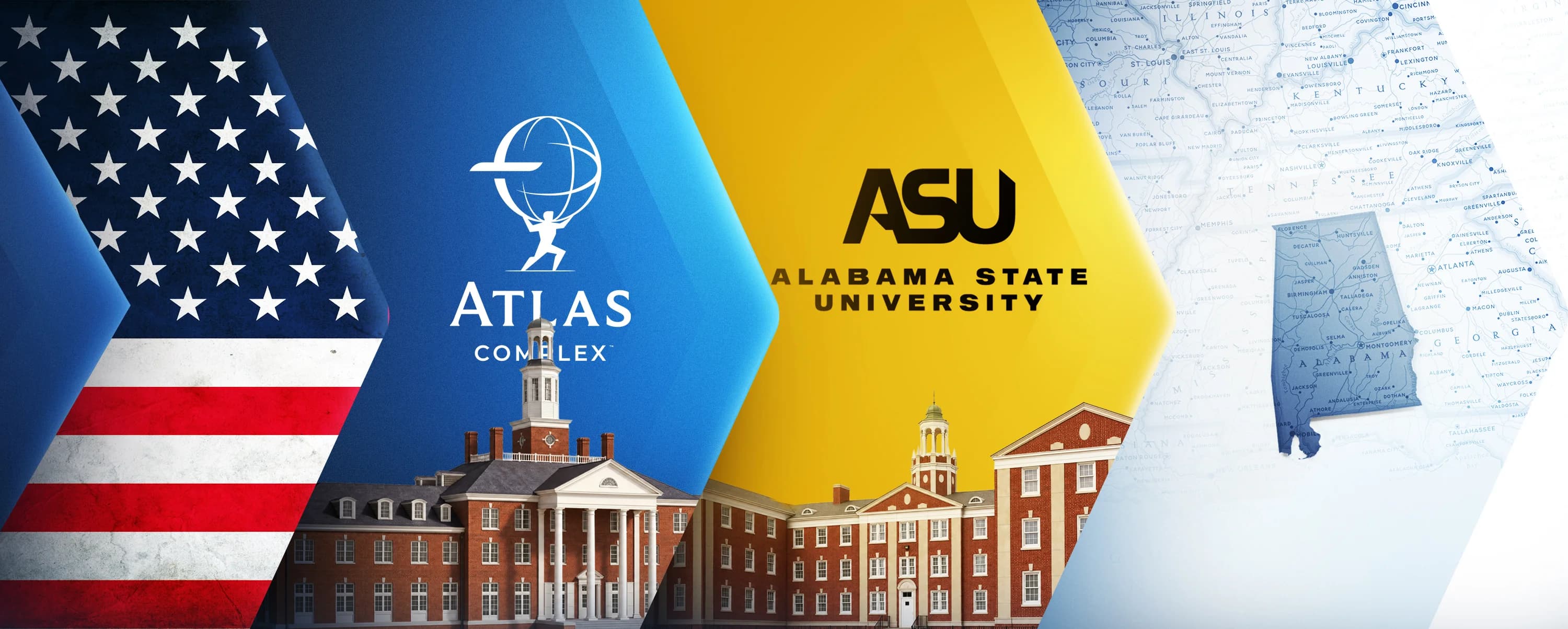
For the United States, it supports the larger effort to expand domestic pharmaceutical capability and reduce supply-chain vulnerability.
For Atlas Complex, it adds the academic, research, and workforce components required to develop a genuinely integrated pharmaceutical ecosystem.
For ASU, it creates new opportunities for students and faculty to participate directly in an industry vital to the nation's health, security, and economic future.
And for Marion and Alabama, it offers the chance to translate a national priority into local investment, high-quality employment, educational opportunity, and lasting economic growth. The real significance of this partnership is not found in any one building, academic program, or business agreement. It is found in the connections among them.
America's pharmaceutical resilience will depend on more than where medicines are manufactured. It will depend on whether the country has the people, infrastructure, expertise, and operating systems needed to manufacture them consistently, protect their quality, and deliver them securely.
That is the future the partnership is working to build.
And why its importance reaches far beyond the boundaries of the Atlas Complex.